


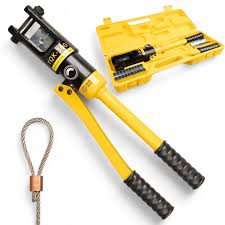
Introduction
Some tools shout for attention. Others quietly do their job and shape the final result without ever being noticed. The crimping tool belongs to the second category. It may not look impressive at first glance, but in the world of electrical work, networking, and mechanical assembly, it plays a decisive role.
A crimping tool doesn’t just connect components—it creates reliability. And reliability is what separates professional work from temporary fixes.
Why the Crimping Tool Exists in the First Place
Before the crimping tool became common, connections relied heavily on twisting wires together or using excessive solder. Those methods worked—until vibration, heat, or time caused failure. The crimping tool was designed to solve a simple but critical problem: how to create a secure connection without damaging the conductor.
By applying controlled pressure, a crimping tool compresses connectors around wires in a way that locks them together mechanically and electrically. The result is a bond that resists movement, corrosion, and signal loss.
Precision Over Force: How a Crimping Tool Really Works
A common misconception is that crimping is about strength. In reality, it’s about precision. A quality crimping tool applies pressure evenly, shaping metal without cutting or weakening it.
Each crimp forms a cold weld—metal pressed so tightly that air gaps disappear. This prevents oxidation and ensures stable conductivity. That’s why a properly crimped connection often outperforms soldered joints in high-stress environments.
One Tool, Many Industries
The crimping tool is not limited to electricians. Because of its adaptability, it is crucial in a variety of fields:
- Electrical installations rely on it for terminals and connectors
- Networking and data cabling use crimping tools for clean signal transmission
- Automotive systems depend on crimped connections to handle vibration
- DIY and repair work benefit from fast, dependable joins
No matter the application, the purpose remains the same: consistency without compromise.
Design Matters More Than You Think
Not all crimping tools are created equal. The design determines accuracy, comfort, and long-term performance. Well-engineered crimping tools include features like controlled ratcheting, ergonomic grips, and interchangeable dies.
These details aren’t cosmetic. They ensure that each crimp is repeatable, reducing user error and preventing uneven pressure. Over time, this consistency saves materials, reduces failures, and improves safety.
The Difference Between a Good Crimp and a Bad One
A poorly tool crimping connection can look fine but fail silently. Wires may loosen, heat may build up, or signals may degrade. A properly used tool crimping eliminates these risks by creating uniform compression.
Good crimps:
- Hold firmly without cutting wire strands
- Maintain electrical continuity
- Resist vibration and temperature changes
This reliability is why professionals trust crimping over temporary solutions.
Crimping Tool vs. Shortcuts
Some people still use pliers as a substitute. While this may seem convenient, it defeats the purpose of crimping. Pliers apply uneven force and often deform connectors incorrectly.
A crimping tool is engineered for one task—and that specialization is its strength. Using the right tool isn’t about being fancy; it’s about avoiding preventable failure.
The Learning Curve Is Short, the Benefits Are Long
One of the strengths of a crimping tool is how quickly it becomes intuitive. Users can attain professional-caliber outcomes with little practice. That makes it accessible for beginners while still essential for experts.
Once learned, crimping becomes faster than soldering and more reliable than twisting wires. This efficiency compounds over time, especially in large projects.
Durability That Pays Off
A quality crimping tool isn’t disposable. Built with hardened steel and precision components, it’s designed to last through thousands of crimps. Over years of use, it proves its value by preventing costly rework.
In many cases, the tool pays for itself by reducing errors alone.
Why the Crimping Tool Still Matters Today
With advances in technology, tools often become obsolete. The crimping tool hasn’t. If anything, it has become more important as systems grow more compact and precise.
Modern electronics demand connections that are strong yet delicate. The crimping tool meets that demand without introducing unnecessary complexity.
Final Perspective: A Tool That Protects Your Work
The crimping tool may not be flashy, but it is foundational. It protects connections, preserves performance, and ensures long-term reliability. Whether used in professional installations or personal projects, it represents attention to detail and respect for craftsmanship.
In the end, a crimping tool doesn’t just connect wires—it connects effort to outcome, ensuring that work done today still holds tomorrow.
Check Out More Latest Articles: Click Here