TECHNOLOGY
AI Detector: Redefining Originality in the Age of Infinite Content

Published
1 month agoon
By
Steven
Introduction
The digital world no longer struggles with a lack of content. It struggles with meaning. Articles are published by the minute, responses are generated instantly, and ideas are reproduced at a scale never seen before. In this environment, the ai detector has emerged as a quiet but powerful force—not to stop progress, but to redefine originality.
This shift is not technical. It’s cultural.
The Content Explosion Nobody Prepared For
Artificial intelligence has made writing faster, cheaper, and more accessible. Businesses can generate blogs in minutes. Students can draft essays instantly. Marketers can scale pages without increasing teams. While efficiency has improved, clarity has diminished.
When everything looks polished, how do we know what was genuinely crafted? The ai detector exists because volume alone can no longer be trusted.
From Creation to Verification
The internet once rewarded creativity. Now it rewards speed. This change forced platforms, publishers, and institutions to rethink verification. It’s no longer enough to ask is this well-written? The question has shifted to where did this come from?
An ai detector answers that question by offering insight into content origin, helping decision-makers restore balance between speed and substance.
Detection Is About Context, Not Accusation
There’s a common misconception that an ai detector is a punishment tool. In reality, it functions more like a lens. It doesn’t accuse; it reveals patterns. It doesn’t decide; it informs.
Detection tools provide probabilities, not verdicts. They exist to support human judgment, not replace it. This distinction keeps creativity alive rather than constrained.
Why Original Thought Still Wins
No matter how advanced AI becomes, it struggles with lived experience. It can generate language, but it cannot replicate intent, emotion, or perspective. An ai detector indirectly encourages creators to lean into what machines lack—insight, opinion, and nuance.
As detection becomes more common, formulaic writing loses value. Depth becomes the differentiator.
The Impact on Education and Professional Spaces
In classrooms, AI detectors have changed how learning is evaluated. The goal is no longer to ban AI, but to define ethical use. Students are encouraged to disclose assistance rather than hide it.
In professional environments, detection supports transparency. Editors, HR teams, and content managers use it to maintain credibility without stifling innovation.
Imperfect Tools by Necessity
Language is not binary. Creativity doesn’t follow rules. That’s why no ai detector claims absolute certainty—and shouldn’t. A perfect detector would be dangerous, removing human interpretation entirely.
Instead, these tools operate in shades of likelihood. This imperfection ensures that final responsibility stays with people, not systems.
A Mirror for Digital Ethics
The existence of an ai detector reveals something deeper: society is renegotiating authorship. What does it mean to “write” when machines assist? Where do we draw the line between collaboration and automation?
Detection tools don’t define ethics—but they force conversations that were previously ignored.
How Detection Is Shaping Better Content
Ironically, ai detectors are improving content quality. Writers are becoming more intentional. Businesses are prioritizing value over volume. Platforms are rewarding originality again.
When creators know content will be evaluated beyond surface polish, they invest more thought into structure, voice, and insight.
The Future of Detection
As AI evolves, detection will move beyond simple identification. The future AI detector will analyze intent, contribution, and originality rather than binary labels. Transparency will matter more than restriction.
Detection will become a standard layer of content evaluation, not a controversial addition.
Why AI Detectors Are Here to Stay
AI-generated content is permanent. So is the need to understand it. As long as machines can write, tools will be needed to contextualize their output.
The ai detector is not a trend—it’s infrastructure.
Final Reflection
An ai detector does not exist to compete with creativity. It exists to protect meaning. In a world where words are easy to generate, understanding their origin has become essential. As artificial intelligence becomes easier to access, the volume of machine-assisted content has exploded. Blogs, essays, product pages, and even news summaries can now be generated in seconds. While efficiency has improved, clarity has suffered.
An ai detector exists to restore balance. It helps platforms, educators, publishers, and businesses understand the origin of content in an era where authorship is increasingly blurred.
For the Information: Click Here
You may like
Tech
Certified Document Translation Services: Your Comprehensive Guide
Published
1 month agoon
January 13, 2026By
Steven
Navigating Certified Document Translation Services: Your Comprehensive Guide
Introduction
In our interconnected global landscape, the role of certified document translation services has grown exponentially. This guide delves into the depths of certified document translation, uncovering its significance and nuances. Join us on a journey through the intricacies of different document types, the essence of “certified,” essential factors in document translation, and why Linguidoor emerges as the beacon of excellence in this realm.
Decoding Certified Document Translation
Certified document translation services transcend mere language conversion. They involve the meticulous translation of documents by official and certified linguists, ensuring not only linguistic accuracy but also cultural sensitivity and adherence to legal standards. These services hold utmost importance for documents of legal, academic, medical, and immigration importance.
Diverse Documents Requiring Certified Translation
Translating Legal Documents
Navigating legal waters demands accurate translation of contracts, deeds, and court orders, which often require certified translation to maintain their integrity and admissibility in foreign legal systems.
Certified Academic Transcripts
Students aspiring to study abroad need their academic transcripts and diplomas translated and certified to fulfill admission prerequisites of educational institutions.
Business Contracts in Translation
In the realm of international business, translating agreements, licenses, and contracts is vital to ensure that all stakeholders comprehend the terms comprehensively.
Certified Medical Record Translation
Bridging the healthcare gap necessitates the certified translation of medical records and reports, enabling effective communication between patients and medical practitioners.
Immigration Document Translation
Crucial for immigration proceedings, documents like birth certificates, marriage certificates, and passports require certified translation to meet the requirements of the destination country.
Unveiling the Essence of “Certified”
The term “certified” carries profound implications. Certified document translation services will always provide a statement attesting to the translator’s diligence and accuracy. This certification lends authenticity, making the translated document credible and acceptable by official entities.
Mastering Document Translation: Key Considerations
To ensure seamless document translation, several factors come into play:
Precision Unleashed: The Art of Accurate Translation
Translations must capture the essence of the original text while maintaining grammatical integrity and coherence in the target language.
Weaving Cultural Threads: Navigating Cultural Sensitivity
Cultural nuances and context are pivotal. A successful translation not only respects language but also reflects cultural norms and sensitivities.
Legal Lens: Translations with Regulatory Compliance
Legal, medical, and immigration documents must adhere to the specific requirements of the destination country’s regulations and legal systems.
Safeguarding Confidentiality: Data Privacy in Translation
Ensuring confidentiality of both the original and translated content is paramount, demanding strict adherence to data protection protocols from your certified document translation service provider.
Linguidoor: Your Ultimate Destination
Linguidoor stands as an unrivaled leader in certified document translation services:
The Experts Behind: Proficiency Redefined
Collaborating with subject-matter experts guarantees accurate translations that capture context and essence flawlessly.
Seal of Authenticity: Court-sworn Certified Translator Corps
Certified professionals handle all certified document translation services, accompanied by certificates of accuracy when required.
Elevating Excellence: Unparalleled Quality Assurance
Stringent quality checks validate and verify every translation, assuring excellence in every delivery.
Worldly Words: A Multilingual Spectrum
Linguidoor’s expansive network of translators offers services in numerous languages, catering to a global clientele.
Client Empowerment: Linguidoor’s Client-Centric Approach
Linguidoor prioritizes client needs, timelines, and budgets, offering tailored solutions that exceed expectations.
Conclusion
Certified document translation services form the cornerstone of effective global communication. In a world where borders are increasingly porous, the ability to bridge linguistic gaps with precision is paramount. The journey through this guide has illuminated the vital role certified translations play in legal, educational, commercial, medical, and immigration contexts.
As the world grows smaller, communication across languages becomes paramount. Linguidoor’s meticulous approach, powered by the expertise of its certified translators, ensures that your documents retain their essence, regardless of the language they are translated into. The seal of “certified” isn’t just a stamp; it’s a testament to accuracy, authenticity, and accountability.
In a realm where every word matters, and precision can alter outcomes, Linguidoor stands as your steadfast companion. It is the compass that ensures your messages traverse linguistic landscapes unaltered and unscathed. So, whether you’re a legal professional striving for justice across languages, a student embarking on an academic odyssey, an entrepreneur exploring new markets, a patient seeking medical care beyond borders, or an individual embarking on a new homeland, Linguidoor empowers you with the linguistic prowess to realize your aspirations.
So, as you step into a world where languages cease to be barriers and become conduits of understanding, remember that Linguidoor stands ready to make your documents resonate in any corner of the globe. It’s not just about translation; it’s about transformation. It’s about crossing boundaries, breaking barriers, and embracing a world without limits—a world where language is no longer a barrier but a bridge to your dreams.
Make your mark in any language, in any corner of the world, with the unrivaled expertise, commitment, and authenticity that Linguidoor brings to every translation. Choose Linguidoor—a choice that transcends words and speaks volumes.
Source URL: https://linguidoor.com/certified-document-translation-services-in-germany/
TECHNOLOGY
The Crimping Tool: Small Device, Serious Precision
Published
1 month agoon
January 12, 2026By
Steven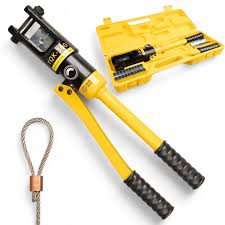
Introduction
Some tools shout for attention. Others quietly do their job and shape the final result without ever being noticed. The crimping tool belongs to the second category. It may not look impressive at first glance, but in the world of electrical work, networking, and mechanical assembly, it plays a decisive role.
A crimping tool doesn’t just connect components—it creates reliability. And reliability is what separates professional work from temporary fixes.
Why the Crimping Tool Exists in the First Place
Before the crimping tool became common, connections relied heavily on twisting wires together or using excessive solder. Those methods worked—until vibration, heat, or time caused failure. The crimping tool was designed to solve a simple but critical problem: how to create a secure connection without damaging the conductor.
By applying controlled pressure, a crimping tool compresses connectors around wires in a way that locks them together mechanically and electrically. The result is a bond that resists movement, corrosion, and signal loss.
Precision Over Force: How a Crimping Tool Really Works
A common misconception is that crimping is about strength. In reality, it’s about precision. A quality crimping tool applies pressure evenly, shaping metal without cutting or weakening it.
Each crimp forms a cold weld—metal pressed so tightly that air gaps disappear. This prevents oxidation and ensures stable conductivity. That’s why a properly crimped connection often outperforms soldered joints in high-stress environments.
One Tool, Many Industries
The crimping tool is not limited to electricians. Because of its adaptability, it is crucial in a variety of fields:
- Electrical installations rely on it for terminals and connectors
- Networking and data cabling use crimping tools for clean signal transmission
- Automotive systems depend on crimped connections to handle vibration
- DIY and repair work benefit from fast, dependable joins
No matter the application, the purpose remains the same: consistency without compromise.
Design Matters More Than You Think
Not all crimping tools are created equal. The design determines accuracy, comfort, and long-term performance. Well-engineered crimping tools include features like controlled ratcheting, ergonomic grips, and interchangeable dies.
These details aren’t cosmetic. They ensure that each crimp is repeatable, reducing user error and preventing uneven pressure. Over time, this consistency saves materials, reduces failures, and improves safety.
The Difference Between a Good Crimp and a Bad One
A poorly tool crimping connection can look fine but fail silently. Wires may loosen, heat may build up, or signals may degrade. A properly used tool crimping eliminates these risks by creating uniform compression.
Good crimps:
- Hold firmly without cutting wire strands
- Maintain electrical continuity
- Resist vibration and temperature changes
This reliability is why professionals trust crimping over temporary solutions.
Crimping Tool vs. Shortcuts
Some people still use pliers as a substitute. While this may seem convenient, it defeats the purpose of crimping. Pliers apply uneven force and often deform connectors incorrectly.
A crimping tool is engineered for one task—and that specialization is its strength. Using the right tool isn’t about being fancy; it’s about avoiding preventable failure.
The Learning Curve Is Short, the Benefits Are Long
One of the strengths of a crimping tool is how quickly it becomes intuitive. Users can attain professional-caliber outcomes with little practice. That makes it accessible for beginners while still essential for experts.
Once learned, crimping becomes faster than soldering and more reliable than twisting wires. This efficiency compounds over time, especially in large projects.
Durability That Pays Off
A quality crimping tool isn’t disposable. Built with hardened steel and precision components, it’s designed to last through thousands of crimps. Over years of use, it proves its value by preventing costly rework.
In many cases, the tool pays for itself by reducing errors alone.
Why the Crimping Tool Still Matters Today
With advances in technology, tools often become obsolete. The crimping tool hasn’t. If anything, it has become more important as systems grow more compact and precise.
Modern electronics demand connections that are strong yet delicate. The crimping tool meets that demand without introducing unnecessary complexity.
Final Perspective: A Tool That Protects Your Work
The crimping tool may not be flashy, but it is foundational. It protects connections, preserves performance, and ensures long-term reliability. Whether used in professional installations or personal projects, it represents attention to detail and respect for craftsmanship.
In the end, a crimping tool doesn’t just connect wires—it connects effort to outcome, ensuring that work done today still holds tomorrow.
Check Out More Latest Articles: Click Here
BUSINESS
Car Rental NYC: A Smart Guide for Easy City Travel
Published
1 month agoon
January 12, 2026By
Steven
Introduction
Car rental NYC is a popular option for people who want flexibility while moving around one of the busiest cities in the world. While New York City has strong public transport, it does not fit every situation. Visitors, families, business travelers, and gig workers often prefer renting a car for comfort and control. Understanding how car rental NYC works can help you save time, avoid stress, and make better travel decisions.
Why People Choose Car Rental NYC
New York City is large, fast-paced, and diverse. Many people assume renting a car is difficult, but in reality, it can be very useful.
Car rental NYC is ideal for travelers carrying luggage, families with children, or people planning trips outside Manhattan. It is also common among delivery drivers and short-term workers who need a vehicle without long-term commitment. Renting gives you freedom to move on your own schedule.
When Car Rental NYC Makes Sense
There are specific situations where renting a car in NYC is the best choice.
Airport Arrivals and Departures
Renting a car is helpful if you arrive late at night or travel with heavy luggage. It reduces dependence on taxis or crowded public transport.
Out-of-City Travel
Trips to New Jersey, Long Island, upstate New York, or nearby states are much easier with a rental car.
Family and Group Travel
Traveling with multiple people is more comfortable in a rental car than using buses or subways.
Work and Daily Use
Many people use car rental NYC for rideshare, delivery work, or temporary jobs without owning a car.
Types of Cars Available for Rent
Car rental NYC services offer a wide range of vehicles.
- Economy cars for budget-friendly city driving
- Sedans for comfort and longer trips
- SUVs for families and extra luggage
- Vans for group travel or moving needs
Choosing the right car depends on your purpose, number of passengers, and parking plans.
For more articles, rent a car nyc
How Car Rental NYC Works
The process is simple and straightforward.
You select a car online or at a rental office. A valid driver’s license and payment method are required. Some providers also ask for insurance details. Rental periods can range from a single day to several weeks or even months.
Many companies offer flexible plans to match different needs.
Insurance and Rental Rules
Before confirming a car rental NYC booking, it is important to understand insurance options.
Rental companies usually offer basic coverage. Some drivers already have coverage through personal insurance or credit cards. Always check what is included to avoid unnecessary costs.
NYC has strict traffic rules. Speed limits, tolls, and parking signs must be followed carefully. Most toll roads use cashless systems, and charges are usually added later by the rental company.
Parking in New York City
Parking is one of the biggest concerns for people choosing car rental NYC.
Street parking is limited and often restricted by time and location. Parking garages are available but can be expensive, especially in busy areas. Planning parking in advance helps avoid frustration.
Using navigation apps that show parking spots and garages can save both time and money.
Tips to Save Money on Car Rental NYC
Renting a car does not have to be expensive.
- Book in advance for better rates
- Compare prices from different providers
- Avoid peak pickup times when possible
- Return the car on time to avoid extra fees
- Choose fuel-efficient vehicles for city use
Understanding rental terms also helps avoid hidden charges.
Driving Experience in NYC
Driving in New York City can feel intense at first. Traffic moves quickly, and drivers are alert. However, with patience and good navigation tools, most people adjust easily.
Avoiding rush hours and planning routes ahead of time makes driving smoother. Staying calm and focused is key.
Car Rental NYC vs Public Transport
Public transport is reliable but not always convenient.
Subways can be crowded, and buses may be slow during traffic. Ride-hailing services become costly with frequent use. Car rental NYC offers privacy, flexibility, and comfort, especially for longer trips or work-related travel.
Common Mistakes to Avoid
Some renters make avoidable mistakes.
Not checking fuel policies can lead to extra charges. Ignoring insurance details may increase costs. Skipping vehicle inspection before pickup can cause issues later.
Reading the rental agreement carefully helps avoid these problems.
Environmental Considerations
Many car rental NYC providers now offer fuel-efficient and hybrid vehicles. Choosing these options helps reduce fuel costs and environmental impact while driving in the city.
Conclusion
Car rental NYC is a practical solution for people who need flexibility, comfort, and control while traveling or working in New York City. From airport trips to family outings and work needs, renting a car makes many situations easier. By choosing the right vehicle, understanding rules, and planning ahead, you can enjoy a smooth and stress-free experience. For those who value independence and convenience, car rental NYC remains a smart and reliable choice.
For more articles, visit more here



Trending

 FASHION1 month ago
Chromeheart Jeans Winter Sale USA – Shop Authentic Luxury Denim for Less This Season
- BUSINESS1 month ago
Palm Jebel Ali Villas: Off-Plan Opportunities You Shouldn’t Miss
- Blogs1 month ago
OVO Clothing Online Store
- HEALTH1 month ago
How important is sperm morphology in a semen analysis normal report
- NEWS1 month ago
Time in Mumbai, India: Local Clock, Time Zone, and Planning Tips

 EDUCATION1 month ago
The Positive Power of Language Learning in Modern Life
 BUSINESS1 month ago
Vinny Pizza: A Flavor Story That Goes Beyond the Slice
- Blogs1 month ago
The Smarter Way to Heat Your Home Without Rising Energy Costs